Neck Pain
Chapter 19 | Part 2: Cardinal Manifestations and Presentation of Diseases · Part 2 – Cardinal Manifestations & Presentation
Detailed clinical reference synthesised from Harrison's Principles of Internal Medicine, 22nd Edition
🔑 Key Clinical Points
- Red flags requiring urgent investigation: history of cancer, fever, weight loss, recent trauma, progressive neurologic deficits, saddle anesthesia, bladder/bowel incontinence.
- Spurling's maneuver: Positive if rotation/flexion + axial compression triggers upper extremity radiculopathy symptoms.
- Lhermitte's sign: Positive if neck flexion reproduces electric pain down spine/extremities (indicates cervical spinal pathology).
- Hoffmann's test: Sign of hyperreflexia indicating cervical spinal cord pathology (upper motor neuron).
- MRI is the gold standard for soft tissue, radiculopathy, myelopathy, malignancy, and infection; CT for fractures/hardware; X-rays for instability/OA.
- Degenerative cervical myelopathy diagnosis delay can be up to 2 years; early signs include paresthesia and clumsiness.
- Conservative management first: NSAIDs, acetaminophen, muscle relaxants (cyclobenzaprine 5–10 mg at night), supervised exercise, soft collar.
- Surgery indications: Progressive motor deficit, functionally limiting pain refractory to conservative management, spinal cord compression.
- Adjacent segment disease risk after fusion: ~3% per year, 26% per decade.
- Spinal manipulation alone not effective and carries injury risk; radiofrequency ablation for facet joint pain.
📑 Table of Contents
- 1. DEFINITION & OVERVIEW
- 1.1 Epidemiology & Demographics
- 1.2 Pain Characteristics
- 1.3 Physical Examination Overview
- 2. EPIDEMIOLOGY
- 3. ETIOLOGY & PATHOPHYSIOLOGY
- 3.1 Degenerative Cervical Myelopathy
- 3.2 Neoplastic Causes
- 3.3 Infectious Causes
- 3.4 Vascular Causes
- 3.5 Congenital & Autoimmune Causes
- 3.6 Traumatic Causes
- 4. CLINICAL FEATURES
- 4.1 Neurologic Examination Findings
- 4.2 Radiculopathy Neurologic Features
- 5. DIFFERENTIAL DIAGNOSIS
- 5.1 Red Flags
- 5.2 Non-Muscular Causes
- 6. INVESTIGATIONS & DIAGNOSIS
- 6.1 Imaging Modalities
- 6.2 Laboratory Investigations
- 7. MANAGEMENT & TREATMENT
- 7.1 Acute Neck Pain Management
- 7.2 Chronic Neck Pain Management
- 7.3 Surgical Management
- 7.4 Pharmacologic Management
- 7.5 Physical Therapy & Interventional
- 8. PROGNOSIS & COMPLICATIONS
- 8.1 Adjacent Segment Disease
- 8.2 Delay in Diagnosis
- 9. SPECIAL CONSIDERATIONS
- 10. KEY PEARLS & CLINICAL TRAPS
- Figures & Illustrations
📋 Figures in This Chapter
1. DEFINITION & OVERVIEW
- Neck pain is a highly prevalent global problem.
- In the United States, it is the fourth leading cause of disability.
- It can affect people of all ages, genders, and professions.
- Lifetime prevalence is nearly 50%.
- Women appear to be at a higher risk than men.
- Incidence increases with age, peaking in late middle life.
- Associated with sport- and work-related injuries.
- Associated with low job satisfaction and poor work support.
- Underlying causes are diverse; patients often present with nonspecific and vague symptoms.
- Occipital headache is a common complaint.
- Systematic approach to evaluation and management is essential.
- Must recognize dangerous etiologies including infection, malignancy, or spinal cord involvement.
- Clinician should identify if pain has a neuropathic component.
- Neuropathic pain originates from identifiable nerves producing cervical radiculopathy.
- Causes of neuropathic neck pain include compression or irritation of cervical spinal nerves secondary to disk herniation, ligamentous hypertrophy, or facet overgrowth.
1.1 Epidemiology & Demographics
- Lifetime prevalence: Nearly 50%.
- Gender: Women at higher risk than men.
- Age: Incidence increases with age, peaks in late middle life.
- Disability ranking: Fourth leading cause of disability in the United States.
- Risk factors:
- Occupation
- General health
- Past medical history
- Genetics
- Headaches
- Sleep disorders
- Smoking
- Obesity
- Sedentary lifestyle
- Secondary gain
- History of neck pain
- Trauma
- Back pain
- Poor overall physical or mental health.
1.2 Pain Characteristics
- Characteristics of pain should be determined.
- Types:
- Dull
- Sharp
- Electric
- Stabbing
- Spasms
- Aggravating and alleviating factors should be determined.
- Radiating pain into occiput, arms, or hands raises concern for radiculopathy.
- Patients should be specifically asked about:
- Numbness or tingling in extremities
- Clumsiness in hands
- Change in handwriting
- Difficulty with buttons
- Unsteady gait
- Saddle anesthesia
- Bladder or bowel incontinence.
1.3 Physical Examination Overview
- Physical examination begins with observation.
- Head, neck, and shoulder should be examined for:
- Deformity
- Mass
- Skin changes
- Signs of trauma
- Determining location of pain is imperative.
- Quantity of pain should be assessed.
- Interference with daily function and activities should be assessed.
- Range of motion of neck and shoulder should be assessed.
- Restriction or guarding against movement should be noted.
- Fifty percent of cervical motion (flexion, extension, and rotation) originates from the atlantoaxial joint (C1-C2).
- Fifty percent originates from the subaxial (C3-C7).
- Any motion restriction needs to be further investigated to rule out underlying pathologies.
- Pain arising from brachial plexus, shoulder, or peripheral nerves can sometimes be confused with cervical spine disease.
- History and examination usually identify a more distal origin for the pain.
2. EPIDEMIOLOGY
- Highly prevalent global problem.
- Fourth leading cause of disability in the United States.
- Affects all ages, genders, professions.
- Lifetime prevalence nearly 50%.
- Women at higher risk than men.
- Incidence increases with age, peaks in late middle life.
- Associated with sport- and work-related injuries.
- Associated with low job satisfaction and poor work support.
- Risk factors include genetics, headaches, sleep disorders, smoking, obesity, sedentary lifestyle, secondary gain, history of neck pain, trauma, back pain, and poor overall physical or mental health.
3. ETIOLOGY & PATHOPHYSIOLOGY
- Underlying causes of neck pain are diverse.
- Patients often present with nonspecific and vague symptoms.
- Neuropathic pain originates from identifiable nerves producing cervical radiculopathy.
- Causes of neuropathic neck pain include compression or irritation of cervical spinal nerves secondary to:
- Disk herniation
- Ligamentous hypertrophy
- Facet overgrowth
- Degenerative cervical disk disease is a relatively common pathology.
- Degenerative disks contain inflammatory mediators, including proinflammatory cytokines.
- These can lead to stimulation of inflammation-responsive sensory nerve fibers innervating intervertebral disks.
- Resulting in nociceptive or discogenic pain.
- When cervical disks are herniated, they can cause radiculopathy and myelopathy.
- Degenerative cervical myelopathy is the comprehensive term used to describe various degenerative diseases causing symptomatic cervical spine narrowing.
- Includes:
- Cervical spondylosis
- Ossification of the posterior longitudinal ligament
- Degenerative disk disease
- Ossification of the ligamentum flavum
- These conditions can compress the cervical spinal cord and lead to spinal cord injury.
- Initial presenting symptoms can often be vague and misleading.
- Delay in obtaining a diagnosis of degenerative cervical myelopathy can be up to 2 years after onset of symptoms.
- Deterioration in degenerative cervical myelopathy is typically slow and occurs in a stepwise progressive fashion.
- Spinal cord disorders are discussed in Chap. 454.
- Spinal tumors can cause neck pain when they occur in the cervical spine.
- Metastases are the most common extradural spinal tumors.
- Cervical spine involved in <20% of patients with metastatic tumors.
- Neck pain is the most common symptom in such patients.
- Pain tends to be unrelieved by rest and worse at night.
- Metastases sometimes cause pathological fractures, which can also be responsible for neck pain.
- Primary spinal cord tumors include schwannomas, meningiomas, and intramedullary tumors.
- These can induce neuropathic neck pain.
- Primary spinal bone tumors, such as hemangiomas or chordomas, usually cause nociceptive neck pain.
- Systemic tumors such as multiple myeloma or lymphoma may also be responsible for neck pain when the cervical spine is involved.
- Cervical vertebral osteomyelitis and diskitis can cause constant neck pain.
- Fever is present in some patients, but absent in many others, which can lead to a delay in diagnosis.
- Cervical epidural abscess can cause severe neck pain and progressive neurologic deterioration due to cord compression, often requiring urgent surgical intervention.
- Meningitis is another important cause of neck pain, accompanied by fever and headache.
- Vertebral and carotid artery dissections can cause sudden neck pain as well as headache.
- Acute coronary syndromes may present as a referred neck pain.
- Cervical arteriovenous malformations and other vascular pathologies can cause acute neck pain when they bleed.
- Cervical epidural hematomas typically present with sudden neck pain and neurologic deficits.
- They can be misdiagnosed as stroke.
- Neck pain aggravated by palpation of the spinous process can be a helpful distinguishing sign.
- Chiari type 1 malformations can cause headache and neck pain aggravated by cough.
- Pathophysiology remains unclear, but dissociation between intracranial and intraspinal pressures or traction on pain-sensitive nerves of the dura mater may be responsible.
- Rheumatoid arthritis commonly affects the cervical spine and produces neck pain most often due to cervical instability.
- Approximately 50% of patients with rheumatoid arthritis have atlantoaxial subluxation, which may lead to neurologic deterioration.
- Polymyalgia rheumatica presents with pain and stiffness in the neck, shoulder, and pelvic girdle and is accompanied by other systemic symptoms.
- Ankylosing spondylitis also causes neck pain, though chronic back pain is more common, and these pains typically worsen with rest or inactivity.
- Crowned dens syndrome, also known as periodontoid calcium pyrophosphate dihydrate crystal deposition disease, is another cause of severe neck pain and neck stiffness.
- Paget's disease is a bone disorder characterized by an imbalance in bone modeling and remodeling.
- Paget's disease in the cervical spine is less common compared with the thoracolumbar regions but can cause neck pain that tends to be worse at rest.
- Osteoporosis, which is sometimes induced by hyperparathyroidism and glucocorticoid therapy, and osteomalacia due to abnormal vitamin D metabolism, can produce pathological bone fractures.
- Although these disorders usually affect lumbar or lower thoracic vertebrae, neck pain can occur when the cervical spine is affected.
- Traumatic fracture and dislocation of the cervical spine are life-threatening conditions when accompanied by injury to the cervical spinal cord.
- Nociceptive and neuropathic neck pains can be combined.
- Immobilization of the neck is essential to reduce neck pain and prevent further cervical cord injury due to spinal instability.
- Whiplash injury is also responsible for neck pain.
- It is usually caused by motor vehicle collisions.
- Injury to the facet joints is believed to underlie this pain syndrome.
- Approximately 50% of patients with whiplash injury will have had persistent neck pain for 1 year.
- Cervical myofascial pain is a very common clinical condition that can involve diffuse areas around the neck and shoulder.
- Restriction of motions of the cervical spine can cause this nonspecific neck pain.
- Myofascial trigger points, which are palpable nodules housed inside taut muscle bands, are regarded as a hallmark of myofascial pain.
- Soft cervical collars can be modestly helpful by limiting spontaneous and reflex neck movements that exacerbate pain.
- Hard collars are in general poorly tolerated.
3.1 Degenerative Cervical Myelopathy
- Comprehensive term used to describe various degenerative diseases causing symptomatic cervical spine narrowing.
- Includes cervical spondylosis, ossification of the posterior longitudinal ligament, degenerative disk disease, and ossification of the ligamentum flavum.
- Conditions listed above can compress the cervical spinal cord and lead to spinal cord injury.
- Initial presenting symptoms can often be vague and misleading.
- Delay in obtaining a diagnosis of degenerative cervical myelopathy can be up to 2 years after onset of symptoms.
- Deterioration in degenerative cervical myelopathy is typically slow and occurs in a stepwise progressive fashion.
- Early signs of cervical myelopathy can be extremely mild:
- Paresthesia
- Minor loss of hand dexterity
- Feelings of clumsiness
- These can easily be overlooked during the initial clinical encounter, especially when the chief presenting complaint is neck pain.
- Severe dysfunction, including gait disturbance, quadriparesis, and bowel or bladder incontinence, often presents at a later stage.
- Prompt diagnosis and timely surgical intervention at the initial phase of the disease often result in better clinical outcomes in these individuals.
- Importance of early recognition and prompt referral for definitive treatment.
- Risk of subsequent radiculopathy or myelopathy at cervical segments adjacent to a fusion is ~3% per year and 26% per decade.
- Although this risk is sometimes portrayed as a late complication of surgery, it may also reflect the natural history of degenerative cervical disk disease.
3.2 Neoplastic Causes
- Spinal tumors can cause neck pain when they occur in the cervical spine.
- Metastases are the most common extradural spinal tumors.
- Cervical spine involved in <20% of patients with metastatic tumors.
- Neck pain is the most common symptom in such patients.
- Pain tends to be unrelieved by rest and worse at night.
- Metastases sometimes cause pathological fractures, which can also be responsible for neck pain.
- Primary spinal cord tumors include schwannomas, meningiomas, and intramedullary tumors.
- These can induce neuropathic neck pain.
- Primary spinal bone tumors, such as hemangiomas or chordomas, usually cause nociceptive neck pain.
- Systemic tumors such as multiple myeloma or lymphoma may also be responsible for neck pain when the cervical spine is involved.
3.3 Infectious Causes
- Cervical vertebral osteomyelitis and diskitis can cause constant neck pain.
- Fever is present in some patients, but absent in many others, which can lead to a delay in diagnosis.
- Whenever patients present with neck pain and unidentified fever, physicians should always consider these etiologies.
- Especially in patients with a history of intravenous drug abuse, immunocompromised status, diabetes mellitus, or other disorders that predispose to infection.
- Cervical epidural abscess can cause severe neck pain and progressive neurologic deterioration due to cord compression, often requiring urgent surgical intervention.
- Meningitis is another important cause of neck pain, accompanied by fever and headache.
3.4 Vascular Causes
- Neck pain associated with vascular pathologies often occurs suddenly.
- Vertebral and carotid artery dissections can cause sudden neck pain as well as headache.
- Acute coronary syndromes may present as a referred neck pain.
- Cervical arteriovenous malformations and other vascular pathologies can cause acute neck pain when they bleed.
- Cervical epidural hematomas typically present with sudden neck pain and neurologic deficits.
- They can be misdiagnosed as stroke.
- Neck pain aggravated by palpation of the spinous process can be a helpful distinguishing sign.
3.5 Congenital & Autoimmune Causes
- Chiari type 1 malformations can cause headache and neck pain aggravated by cough.
- Pathophysiology remains unclear, but dissociation between intracranial and intraspinal pressures or traction on pain-sensitive nerves of the dura mater may be responsible.
- Rheumatoid arthritis commonly affects the cervical spine and produces neck pain most often due to cervical instability.
- Approximately 50% of patients with rheumatoid arthritis have atlantoaxial subluxation, which may lead to neurologic deterioration.
- Polymyalgia rheumatica presents with pain and stiffness in the neck, shoulder, and pelvic girdle and is accompanied by other systemic symptoms.
- Ankylosing spondylitis also causes neck pain, though chronic back pain is more common, and these pains typically worsen with rest or inactivity.
- Crowned dens syndrome, also known as periodontoid calcium pyrophosphate dihydrate crystal deposition disease, is another cause of severe neck pain and neck stiffness.
- Paget's disease is a bone disorder characterized by an imbalance in bone modeling and remodeling.
- Paget's disease in the cervical spine is less common compared with the thoracolumbar regions but can cause neck pain that tends to be worse at rest.
- Osteoporosis, which is sometimes induced by hyperparathyroidism and glucocorticoid therapy, and osteomalacia due to abnormal vitamin D metabolism, can produce pathological bone fractures.
- Although these disorders usually affect lumbar or lower thoracic vertebrae, neck pain can occur when the cervical spine is affected.
3.6 Traumatic Causes
- Traumatic fracture and dislocation of the cervical spine are life-threatening conditions when accompanied by injury to the cervical spinal cord.
- Nociceptive and neuropathic neck pains can be combined.
- Immobilization of the neck is essential to reduce neck pain and prevent further cervical cord injury due to spinal instability.
- Whiplash injury is also responsible for neck pain.
- It is usually caused by motor vehicle collisions.
- Injury to the facet joints is believed to underlie this pain syndrome.
- Approximately 50% of patients with whiplash injury will have had persistent neck pain for 1 year.
- Cervical myofascial pain is a very common clinical condition that can involve diffuse areas around the neck and shoulder.
- Restriction of motions of the cervical spine can cause this nonspecific neck pain.
- Myofascial trigger points, which are palpable nodules housed inside taut muscle bands, are regarded as a hallmark of myofascial pain.
4. CLINICAL FEATURES
- Neck pain usually arises from diseases of the cervical spine and soft tissues of the neck.
- Typically precipitated by movement.
- May be accompanied by focal tenderness and limitation of motion.
- Pain arising from the brachial plexus, shoulder, or peripheral nerves can sometimes be confused with cervical spine disease.
- History and examination usually identify a more distal origin for the pain.
- Radicular pain in the arms typically follows dermatomal distributions.
- Obtaining a precise description of the pain pattern can assist in determining if the pain is neuropathic and where the problem might originate.
- If a patient describes radiculopathy-like or other neuropathic pain, a complete neurologic examination is required.
- Includes assessment of:
- Cranial nerves
- Motor strength
- Sensation
- Coordination
- Reflexes
- Gait
- A few bedside tests are of particular value when assessing for radiculopathy or possible spinal cord involvement in patients presenting with neck pain.
- Spurling's maneuver is a test for radiculopathy originating from the cervical spine.
- Performed by passively rotating and flexing a patient's neck laterally and performing axial compression to the top of the head.
- Test is considered positive if it triggers or worsens symptoms of upper extremity radiculopathy.
- Lhermitte's sign is elicited by gently flexing a patient's neck.
- Considered positive and signifies underlying cervical spinal pathology if the maneuver reproduces electric pain down the spine or extremities.
- Hoffmann's test should be performed whenever there is any suspicion of cervical spinal cord pathology.
- It is a sign of hyperreflexia whereby a patient involuntarily flexes and adducts the thumb and index finger while the examiner snaps the distal phalanx of the middle finger.
- Similarly, the presence of more than three beats of ankle clonus when the ankle is briskly dorsiflexed and held under pressure by the examiner is an upper motor neuron sign signifying underlying spinal cord pathology.
- Patients should also be observed for tandem or heel-to-toe gait, the integrity of which is dependent on proprioception, as well as coordination and strength.
- Patients are asked to walk in a straight line with one foot in front of the other.
- If there are any signs of imbalance (i.e., the patient is not able to complete this task), the possibility of spinal cord compression should be considered.
- Signs or symptoms of infection:
- Fever
- Neck stiffness
- History of cancer
- History of substance abuse
- Severe neck pain and tenderness
- History of inflammatory arthritis
- Torticollis
- Recent trauma to the head and neck
- Motor weakness in upper or lower extremities
- Sensory changes in upper or lower extremities
- Family history of spinal conditions
- Upper motor neuron signs: Hoffman, clonus, Babinski
- Unexplained weight loss
- Hyperreflexia
- Progressive neurologic deficits
- Unsteady gait
- Saddle anesthesia
- Difficulty with tandem or heel-to-toe walk
- Bladder or bowel incontinence
4.1 Neurologic Examination Findings
- Complete neurologic examination is required if patient describes radiculopathy-like or other neuropathic pain.
- Assessment includes:
- Cranial nerves
- Motor strength
- Sensation
- Coordination
- Reflexes
- Gait
- Bedside tests of particular value:
- Spurling's maneuver
- Lhermitte's sign
- Hoffmann's test
- Ankle clonus
- Tandem or heel-to-toe gait
- Upper motor neuron signs: Hoffman, clonus, Babinski
- Hyperreflexia
- Unsteady gait
- Saddle anesthesia
- Difficulty with tandem or heel-to-toe walk
- Bladder or bowel incontinence
4.2 Radiculopathy Neurologic Features
- Radicular pain in the arms typically follows dermatomal distributions.
- Obtaining a precise description of the pain pattern can assist in determining if the pain is neuropathic and where the problem might originate.
- The nerve root most frequently affected is C7, followed by C6.
- Besides neck pain, cervical radiculopathy is commonly accompanied by symptoms such as pain, sensory disturbance, and motor weakness in the shoulder, interscapular, or upper limb, depending on the affected nerve root.
- However, neck pain can be the only symptom, especially when arising from nerve roots at C4 or higher.
- Table 19-1 summarizes neurologic features of cervical radiculopathy.
5. DIFFERENTIAL DIAGNOSIS
- Differential diagnosis of neck pain is very broad.
- Most important goal of clinical evaluation is recognizing nonmuscular causes of pain and identifying clinically dangerous underlying pathology.
- Causes include:
- Degenerative cervical disk disease
- Cervical radiculopathy
- Degenerative cervical myelopathy
- Neoplastic causes
- Infectious causes
- Vascular causes
- Congenital causes
- Autoimmune/Inflammatory causes
- Endocrine/Metabolic causes
- Traumatic causes
- Other causes (myofascial pain)
- Red flags that indicate possible presence of myelopathy, malignancy, infection, or a severe spinal column injury require urgent assessment.
5.1 Red Flags
- History of cancer
- Fever
- History of substance abuse
- Severe neck pain and tenderness
- History of inflammatory arthritis
- Torticollis
- Recent trauma to the head and neck
- Motor weakness in upper or lower extremities
- Sensory changes in upper or lower extremities
- Family history of spinal conditions
- Upper motor neuron signs: Hoffman, clonus, Babinski
- Unexplained weight loss
- Hyperreflexia
- Progressive neurologic deficits
- Unsteady gait
- Saddle anesthesia
- Difficulty with tandem or heel-to-toe walk
- Bladder or bowel incontinence
5.2 Non-Muscular Causes
- Recognizing nonmuscular causes of pain is the most important goal of clinical evaluation.
- Identifying clinically dangerous underlying pathology is essential.
- Includes infection, malignancy, or spinal cord involvement from any cause.
6. INVESTIGATIONS & DIAGNOSIS
- Imaging and additional tests are often necessary to finalize the diagnosis.
- Should be guided by the patient's history and physical examination findings.
- Cervical spine x-rays are simple diagnostic tools that are readily accessible.
- Can provide an excellent initial assessment for spinal column pathologies.
- Performed in the anterior-posterior, lateral, and flexion-extension views.
- Useful tools to screen for fractures, instability, and osteoarthritis.
- Can often prompt further investigations.
- Computed tomography (CT) scan is usually indicated if there are any concerns for fractures in the spinal column.
- Or if there have been previous surgical instrumentations to assess for any hardware complications.
- Due to the poor visualization of soft tissues, CT is not very helpful when evaluating the spinal cord or ruling out intervertebral disk pathologies.
- Magnetic resonance imaging (MRI) is the gold standard for assessing these soft tissue structures.
- MRI is indicated for patients presenting with radiculopathy symptoms or signs of myelopathy or other neurologic deficits.
- MRI is also the imaging modality of choice when ruling out malignancy or infectious causes of neck pain.
- Given the high rate of abnormal findings on MRI in asymptomatic individuals, and degenerative changes in particular, it should be performed with caution.
- Only in subjects with strong indications based on history, physical exam, and other screening radiographs.
- For individuals in whom MRI is contraindicated, CT myelography can be used to assess the spinal cord and surrounding structures.
- Electromyography (EMG) and nerve conduction studies (NCS) are diagnostic studies often utilized in evaluating a patient with neck pain and associated neuropathic symptoms.
- While these electrodiagnostic studies are typically unnecessary when the diagnosis is clear, they can be helpful when a patient's symptoms do not correlate with the MRI findings.
- By measuring the electrical response to nerve stimulation in the muscles and the speed by which an electrical impulse travels, the combination of EMG and NCS can distinguish radiculopathy arising from the spine from peripheral neuropathy and brachial plexopathy.
- Referral to a neurologist is recommended in the setting of high clinical suspicion and negative electrodiagnostic findings.
- Routine laboratory tests have limited value in assessment of most patients with neck pain.
- However, if there is clinical suspicion of an underlying infection, malignancy, inflammatory arthritis, or neuromuscular disorder, appropriate blood panels should be obtained.
- Table 19-2 summarizes clinical findings that should prompt a clinician to conduct further investigations to rule out dangerous underlying etiologies.
6.1 Imaging Modalities
- Cervical spine x-rays:
- Simple diagnostic tools readily accessible.
- Excellent initial assessment for spinal column pathologies.
- Performed in anterior-posterior, lateral, and flexion-extension views.
- Useful to screen for fractures, instability, and osteoarthritis.
- Can often prompt further investigations.
- Computed tomography (CT):
- Usually indicated if concerns for fractures in the spinal column.
- Or if previous surgical instrumentations to assess for hardware complications.
- Poor visualization of soft tissues.
- Not very helpful when evaluating the spinal cord or ruling out intervertebral disk pathologies.
- Magnetic resonance imaging (MRI):
- Gold standard for assessing soft tissue structures.
- Indicated for patients presenting with radiculopathy symptoms or signs of myelopathy or other neurologic deficits.
- Imaging modality of choice when ruling out malignancy or infectious causes of neck pain.
- High rate of abnormal findings on MRI in asymptomatic individuals.
- Degenerative changes in particular.
- Should be performed with caution.
- Only in subjects with strong indications based on history, physical exam, and other screening radiographs.
- CT myelography:
- Used if MRI is contraindicated.
- Contrast injected into the spinal canal prior to the CT scan.
- Can be used to assess the spinal cord and surrounding structures.
- Electromyography (EMG) and nerve conduction studies (NCS):
- Diagnostic studies often utilized in evaluating a patient with neck pain and associated neuropathic symptoms.
- Typically unnecessary when the diagnosis is clear.
- Can be helpful when a patient's symptoms do not correlate with the MRI findings.
- Measuring electrical response to nerve stimulation in the muscles.
- Speed by which an electrical impulse travels.
- Distinguish radiculopathy arising from the spine from peripheral neuropathy and brachial plexopathy.
- Referral to a neurologist recommended in setting of high clinical suspicion and negative electrodiagnostic findings.
6.2 Laboratory Investigations
- Routine laboratory tests have limited value in assessment of most patients with neck pain.
- However, if there is clinical suspicion of an underlying infection, malignancy, inflammatory arthritis, or neuromuscular disorder, appropriate blood panels should be obtained.
7. MANAGEMENT & TREATMENT
- Given the broad differential diagnosis of neck pain, the management and treatment should be tailored toward the underlying condition.
- Most important is to recognize red flags that indicate the possible presence of myelopathy, malignancy, infection, or a severe spinal column injury.
- In such cases, urgent assessment is required.
- Discussion below will focus on the management of the common causes of neck pain seen in general medical practice.
- In general, the evidence regarding treatment for neck pain is less comprehensive than that for low back pain.
- But the approach is similar in many respects.
- For many patients with acute neck pain, spontaneous improvement is the norm.
- Usual goals of therapy are to promote a rapid return to normal function and provide pain relief while healing proceeds.
- Acute neck pain is often treated with nonsteroidal anti-inflammatory drugs (NSAIDs), acetaminophen, cold packs, or heat.
- If cervical radiculopathy is due to bony compression from cervical spondylosis with foraminal narrowing, periodic follow-up to assess for progression is indicated.
- Consideration of surgical decompression is reasonable.
- Surgical treatment can produce rapid pain relief, although it is unclear if long-term functional outcomes are improved over nonsurgical therapy.
- Indications for cervical disk surgery include:
- A progressive motor deficit due to nerve root compression.
- Functionally limiting pain that fails to respond to conservative management.
- Spinal cord compression.
- In other circumstances, clinical improvement over time regardless of therapeutic intervention is common.
- Natural history of acute neck pain with radiculopathy due to disk disease is also favorable.
- Many patients will improve without specific therapy.
- Although there are no randomized trials of NSAIDs for neck pain, a course of NSAIDs, acetaminophen, or both, with or without muscle relaxants, and avoidance of activities that trigger symptoms are reasonable as initial therapy.
- Gentle supervised exercise and avoidance of inactivity are reasonable as well.
- A short course of high-dose oral glucocorticoids with a rapid taper or epidural steroids administered under imaging guidance can be effective for acute or subacute disk-related cervical radicular pain.
- Have not been subjected to rigorous trials.
- Risk of injection-related complications is higher in the neck than the low back.
- Vertebral artery dissection, dural puncture, spinal cord injury, and embolism in the vertebral arteries have all been reported.
- Opioid analgesics can be used in the emergency department and for short courses as an outpatient.
- Soft cervical collars can be modestly helpful by limiting spontaneous and reflex neck movements that exacerbate pain.
- Hard collars are in general poorly tolerated.
- For patients with acute neck pain to avoid unrealistic fear and inappropriate requests for imaging and other tests.
- Patients should be specifically educated regarding the favorable natural history of acute neck pain.
- Cyclobenzaprine (5–10 mg) at night can help relieve muscle spasm and promote drowsiness.
- A trial of physiotherapy such as supervised exercise with or without mobilization appears to be effective.
- Exercises often include shoulder rolls and neck stretches.
- The McKenzie method of physical therapy is one option in widespread use.
- Some patients obtain modest pain relief using a soft neck collar.
- There is little risk or cost.
- Massage can produce temporary pain relief.
- For patients with chronic neck pain, supervised exercise programs can provide symptom relief and improve function.
- Acupuncture provided short-term benefit for some patients when compared to a sham procedure.
- Is an option.
- Spinal manipulation alone has not been shown to be effective.
- Carries a risk for injury.
- Surgery plays a very limited role in patients with acute and chronic neck pain without neurologic findings, spine instability, or fractures.
- For individuals with pain refractory to conservative management, referral to a pain specialist can be of benefit.
- The literature shows that neck pain originating from cervical facet joints can be effectively treated with fluoroscopically guided radiofrequency ablation.
- However, careful patient selection is essential to ensure optimal outcomes.
- The procedure is not available in many centers.
- Referral to a specialist for diagnostic and treatment guidance is highly recommended for any patient in whom such procedures are considered.
- Surgical treatments include:
- Anterior cervical diskectomy/corpectomy and fusion.
- Posterior cervical laminectomy.
- Laminoplasty.
- Laminectomy with fusion.
- The risk of subsequent radiculopathy or myelopathy at cervical segments adjacent to a fusion is ~3% per year and 26% per decade.
- Although this risk is sometimes portrayed as a late complication of surgery, it may also reflect the natural history of degenerative cervical disk disease.
- For patients kept awake by symptoms, cyclobenzaprine (5–10 mg) at night can help relieve muscle spasm and promote drowsiness.
- A trial of physiotherapy such as supervised exercise with or without mobilization appears to be effective.
- Exercises often include shoulder rolls and neck stretches.
- The McKenzie method of physical therapy is one option in widespread use.
- Some patients obtain modest pain relief using a soft neck collar.
- There is little risk or cost.
- Massage can produce temporary pain relief.
- For patients with chronic neck pain, supervised exercise programs can provide symptom relief and improve function.
- Acupuncture provided short-term benefit for some patients when compared to a sham procedure.
- Is an option.
- Spinal manipulation alone has not been shown to be effective.
- Carries a risk for injury.
- Surgery plays a very limited role in patients with acute and chronic neck pain without neurologic findings, spine instability, or fractures.
- For individuals with pain refractory to conservative management, referral to a pain specialist can be of benefit.
- The literature shows that neck pain originating from cervical facet joints can be effectively treated with fluoroscopically guided radiofrequency ablation.
- However, careful patient selection is essential to ensure optimal outcomes.
- The procedure is not available in many centers.
- Referral to a specialist for diagnostic and treatment guidance is highly recommended for any patient in whom such procedures are considered.
7.1 Acute Neck Pain Management
- For many patients with acute neck pain, spontaneous improvement is the norm.
- Usual goals of therapy are to promote a rapid return to normal function and provide pain relief while healing proceeds.
- Acute neck pain is often treated with:
- Nonsteroidal anti-inflammatory drugs (NSAIDs)
- Acetaminophen
- Cold packs
- Heat
- If cervical radiculopathy is due to bony compression from cervical spondylosis with foraminal narrowing, periodic follow-up to assess for progression is indicated.
- Consideration of surgical decompression is reasonable.
- Surgical treatment can produce rapid pain relief, although it is unclear if long-term functional outcomes are improved over nonsurgical therapy.
- Indications for cervical disk surgery include:
- A progressive motor deficit due to nerve root compression.
- Functionally limiting pain that fails to respond to conservative management.
- Spinal cord compression.
- In other circumstances, clinical improvement over time regardless of therapeutic intervention is common.
- Natural history of acute neck pain with radiculopathy due to disk disease is also favorable.
- Many patients will improve without specific therapy.
- Although there are no randomized trials of NSAIDs for neck pain, a course of NSAIDs, acetaminophen, or both, with or without muscle relaxants, and avoidance of activities that trigger symptoms are reasonable as initial therapy.
- Gentle supervised exercise and avoidance of inactivity are reasonable as well.
- A short course of high-dose oral glucocorticoids with a rapid taper or epidural steroids administered under imaging guidance can be effective for acute or subacute disk-related cervical radicular pain.
- Have not been subjected to rigorous trials.
- Risk of injection-related complications is higher in the neck than the low back.
- Vertebral artery dissection, dural puncture, spinal cord injury, and embolism in the vertebral arteries have all been reported.
- Opioid analgesics can be used in the emergency department and for short courses as an outpatient.
- Soft cervical collars can be modestly helpful by limiting spontaneous and reflex neck movements that exacerbate pain.
- Hard collars are in general poorly tolerated.
- For patients kept awake by symptoms, cyclobenzaprine (5–10 mg) at night can help relieve muscle spasm and promote drowsiness.
- Patients should be specifically educated regarding the favorable natural history of acute neck pain.
- To avoid unrealistic fear and inappropriate requests for imaging and other tests.
7.2 Chronic Neck Pain Management
- For patients with chronic neck pain, supervised exercise programs can provide symptom relief and improve function.
- Acupuncture provided short-term benefit for some patients when compared to a sham procedure.
- Is an option.
- Spinal manipulation alone has not been shown to be effective.
- Carries a risk for injury.
- Surgery plays a very limited role in patients with acute and chronic neck pain without neurologic findings, spine instability, or fractures.
- For individuals with pain refractory to conservative management, referral to a pain specialist can be of benefit.
- The literature shows that neck pain originating from cervical facet joints can be effectively treated with fluoroscopically guided radiofrequency ablation.
- However, careful patient selection is essential to ensure optimal outcomes.
- The procedure is not available in many centers.
- Referral to a specialist for diagnostic and treatment guidance is highly recommended for any patient in whom such procedures are considered.
7.3 Surgical Management
- Surgical treatments include:
- Anterior cervical diskectomy/corpectomy and fusion.
- Posterior cervical laminectomy.
- Laminoplasty.
- Laminectomy with fusion.
- The risk of subsequent radiculopathy or myelopathy at cervical segments adjacent to a fusion is ~3% per year and 26% per decade.
- Although this risk is sometimes portrayed as a late complication of surgery, it may also reflect the natural history of degenerative cervical disk disease.
- Indications for cervical disk surgery include:
- A progressive motor deficit due to nerve root compression.
- Functionally limiting pain that fails to respond to conservative management.
- Spinal cord compression.
- In other circumstances, clinical improvement over time regardless of therapeutic intervention is common.
7.4 Pharmacologic Management
- Acute neck pain is often treated with:
- Nonsteroidal anti-inflammatory drugs (NSAIDs)
- Acetaminophen
- Cold packs
- Heat
- A course of NSAIDs, acetaminophen, or both, with or without muscle relaxants, and avoidance of activities that trigger symptoms are reasonable as initial therapy.
- A short course of high-dose oral glucocorticoids with a rapid taper or epidural steroids administered under imaging guidance can be effective for acute or subacute disk-related cervical radicular pain.
- Have not been subjected to rigorous trials.
- Opioid analgesics can be used in the emergency department and for short courses as an outpatient.
- For patients kept awake by symptoms, cyclobenzaprine (5–10 mg) at night can help relieve muscle spasm and promote drowsiness.
7.5 Physical Therapy & Interventional
- A trial of physiotherapy such as supervised exercise with or without mobilization appears to be effective.
- Exercises often include shoulder rolls and neck stretches.
- The McKenzie method of physical therapy is one option in widespread use.
- Some patients obtain modest pain relief using a soft neck collar.
- There is little risk or cost.
- Massage can produce temporary pain relief.
- For patients with chronic neck pain, supervised exercise programs can provide symptom relief and improve function.
- Acupuncture provided short-term benefit for some patients when compared to a sham procedure.
- Is an option.
- Spinal manipulation alone has not been shown to be effective.
- Carries a risk for injury.
- Neck pain originating from cervical facet joints can be effectively treated with fluoroscopically guided radiofrequency ablation.
- However, careful patient selection is essential to ensure optimal outcomes.
- The procedure is not available in many centers.
8. PROGNOSIS & COMPLICATIONS
- Natural history of acute neck pain with radiculopathy due to disk disease is also favorable.
- Many patients will improve without specific therapy.
- Although there are no randomized trials of NSAIDs for neck pain, a course of NSAIDs, acetaminophen, or both, with or without muscle relaxants, and avoidance of activities that trigger symptoms are reasonable as initial therapy.
- Gentle supervised exercise and avoidance of inactivity are reasonable as well.
- A short course of high-dose oral glucocorticoids with a rapid taper or epidural steroids administered under imaging guidance can be effective for acute or subacute disk-related cervical radicular pain.
- Have not been subjected to rigorous trials.
- Risk of injection-related complications is higher in the neck than the low back.
- Vertebral artery dissection, dural puncture, spinal cord injury, and embolism in the vertebral arteries have all been reported.
- Opioid analgesics can be used in the emergency department and for short courses as an outpatient.
- Soft cervical collars can be modestly helpful by limiting spontaneous and reflex neck movements that exacerbate pain.
- Hard collars are in general poorly tolerated.
- For patients kept awake by symptoms, cyclobenzaprine (5–10 mg) at night can help relieve muscle spasm and promote drowsiness.
- A trial of physiotherapy such as supervised exercise with or without mobilization appears to be effective.
- Exercises often include shoulder rolls and neck stretches.
- The McKenzie method of physical therapy is one option in widespread use.
- Some patients obtain modest pain relief using a soft neck collar.
- There is little risk or cost.
- Massage can produce temporary pain relief.
- For patients with chronic neck pain, supervised exercise programs can provide symptom relief and improve function.
- Acupuncture provided short-term benefit for some patients when compared to a sham procedure.
- Is an option.
- Spinal manipulation alone has not been shown to be effective.
- Carries a risk for injury.
- Surgery plays a very limited role in patients with acute and chronic neck pain without neurologic findings, spine instability, or fractures.
- For individuals with pain refractory to conservative management, referral to a pain specialist can be of benefit.
- The literature shows that neck pain originating from cervical facet joints can be effectively treated with fluoroscopically guided radiofrequency ablation.
- However, careful patient selection is essential to ensure optimal outcomes.
- The procedure is not available in many centers.
- Referral to a specialist for diagnostic and treatment guidance is highly recommended for any patient in whom such procedures are considered.
- The risk of subsequent radiculopathy or myelopathy at cervical segments adjacent to a fusion is ~3% per year and 26% per decade.
- Although this risk is sometimes portrayed as a late complication of surgery, it may also reflect the natural history of degenerative cervical disk disease.
- Degenerative cervical myelopathy deterioration is typically slow and occurs in a stepwise progressive fashion.
- Delay in obtaining a diagnosis of degenerative cervical myelopathy can be up to 2 years after onset of symptoms.
- Prompt diagnosis and timely surgical intervention at the initial phase of the disease often result in better clinical outcomes in these individuals.
- Importance of early recognition and prompt referral for definitive treatment.
8.1 Adjacent Segment Disease
- Risk of subsequent radiculopathy or myelopathy at cervical segments adjacent to a fusion is ~3% per year and 26% per decade.
- Although this risk is sometimes portrayed as a late complication of surgery, it may also reflect the natural history of degenerative cervical disk disease.
8.2 Delay in Diagnosis
- Delay in obtaining a diagnosis of degenerative cervical myelopathy can be up to 2 years after onset of symptoms.
- Given the shifting demographics of an aging society, this will become more and more relevant at the primary care level, where these patients are typically first encountered.
- The early signs of cervical myelopathy can be extremely mild, such as paresthesia, minor loss of hand dexterity, or feelings of clumsiness.
- These can easily be overlooked during the initial clinical encounter, especially when the chief presenting complaint is neck pain.
- Severe dysfunction, including gait disturbance, quadriparesis, and bowel or bladder incontinence, often presents at a later stage.
- However, prompt diagnosis and timely surgical intervention at the initial phase of the disease often result in better clinical outcomes in these individuals.
- Hence the importance of early recognition and prompt referral for definitive treatment.
9. SPECIAL CONSIDERATIONS
- Patients should be specifically educated regarding the favorable natural history of acute neck pain.
- To avoid unrealistic fear and inappropriate requests for imaging and other tests.
- For patients kept awake by symptoms, cyclobenzaprine (5–10 mg) at night can help relieve muscle spasm and promote drowsiness.
- A trial of physiotherapy such as supervised exercise with or without mobilization appears to be effective.
- Exercises often include shoulder rolls and neck stretches.
- The McKenzie method of physical therapy is one option in widespread use.
- Some patients obtain modest pain relief using a soft neck collar.
- There is little risk or cost.
- Massage can produce temporary pain relief.
- For patients with chronic neck pain, supervised exercise programs can provide symptom relief and improve function.
- Acupuncture provided short-term benefit for some patients when compared to a sham procedure.
- Is an option.
- Spinal manipulation alone has not been shown to be effective.
- Carries a risk for injury.
- Surgery plays a very limited role in patients with acute and chronic neck pain without neurologic findings, spine instability, or fractures.
- For individuals with pain refractory to conservative management, referral to a pain specialist can be of benefit.
- The literature shows that neck pain originating from cervical facet joints can be effectively treated with fluoroscopically guided radiofrequency ablation.
- However, careful patient selection is essential to ensure optimal outcomes.
- The procedure is not available in many centers.
- Referral to a specialist for diagnostic and treatment guidance is highly recommended for any patient in whom such procedures are considered.
10. KEY PEARLS & CLINICAL TRAPS
- Red flags that indicate the possible presence of myelopathy, malignancy, infection, or a severe spinal column injury require urgent assessment.
- Spinal manipulation alone has not been shown to be effective.
- Carries a risk for injury.
- Surgery plays a very limited role in patients with acute and chronic neck pain without neurologic findings, spine instability, or fractures.
- For individuals with pain refractory to conservative management, referral to a pain specialist can be of benefit.
- The literature shows that neck pain originating from cervical facet joints can be effectively treated with fluoroscopically guided radiofrequency ablation.
- However, careful patient selection is essential to ensure optimal outcomes.
- The procedure is not available in many centers.
- Referral to a specialist for diagnostic and treatment guidance is highly recommended for any patient in whom such procedures are considered.
- The risk of subsequent radiculopathy or myelopathy at cervical segments adjacent to a fusion is ~3% per year and 26% per decade.
- Although this risk is sometimes portrayed as a late complication of surgery, it may also reflect the natural history of degenerative cervical disk disease.
- Degenerative cervical myelopathy deterioration is typically slow and occurs in a stepwise progressive fashion.
- Delay in obtaining a diagnosis of degenerative cervical myelopathy can be up to 2 years after onset of symptoms.
- Prompt diagnosis and timely surgical intervention at the initial phase of the disease often result in better clinical outcomes in these individuals.
- Importance of early recognition and prompt referral for definitive treatment.
- Patients should be specifically educated regarding the favorable natural history of acute neck pain.
- To avoid unrealistic fear and inappropriate requests for imaging and other tests.
- For patients kept awake by symptoms, cyclobenzaprine (5–10 mg) at night can help relieve muscle spasm and promote drowsiness.
- A trial of physiotherapy such as supervised exercise with or without mobilization appears to be effective.
- Exercises often include shoulder rolls and neck stretches.
- The McKenzie method of physical therapy is one option in widespread use.
- Some patients obtain modest pain relief using a soft neck collar.
- There is little risk or cost.
- Massage can produce temporary pain relief.
- For patients with chronic neck pain, supervised exercise programs can provide symptom relief and improve function.
- Acupuncture provided short-term benefit for some patients when compared to a sham procedure.
- Is an option.
- Spinal manipulation alone has not been shown to be effective.
- Carries a risk for injury.
- Surgery plays a very limited role in patients with acute and chronic neck pain without neurologic findings, spine instability, or fractures.
- For individuals with pain refractory to conservative management, referral to a pain specialist can be of benefit.
- The literature shows that neck pain originating from cervical facet joints can be effectively treated with fluoroscopically guided radiofrequency ablation.
- However, careful patient selection is essential to ensure optimal outcomes.
- The procedure is not available in many centers.
- Referral to a specialist for diagnostic and treatment guidance is highly recommended for any patient in whom such procedures are considered.
Figures & Illustrations
Reproduced from Harrison's 22nd Edition.
Figure 1

Caption: FIGURE 19-1 Cases of degenerative cervical disk disease and degenerative cervical (arrowhead) (A), and cervical magnetic resonance imaging (MRI) shows a herniated disease. Cervical x-ray shows osteophytic spurs at C5/C6 and C6/C7 levels (dotted arrow) flavum (double arrows) (D) in a case of degenerative cervical myelopathy. — Figure 19-1 Cases of degenerative cervical disk disease and degenerative cervical myelopathy. Cervical x-ray shows a disk height reduction at the C5/C6 level (arrowhead) (A), and cervical magnetic resonance imaging (MRI) shows a herniated disk compressing the spinal cord (arrow) (B) in a case of degenerative cervical disk disease. Cervical x-ray shows osteophytic spurs at C5/C6 and C6/C7 levels (dotted arrow) (C), and cervical MRI shows a protruded disk (asterisk) and thickened ligamentum flavum (double arrows) (D) in a case of degenerative cervical myelopathy.
Figure 2
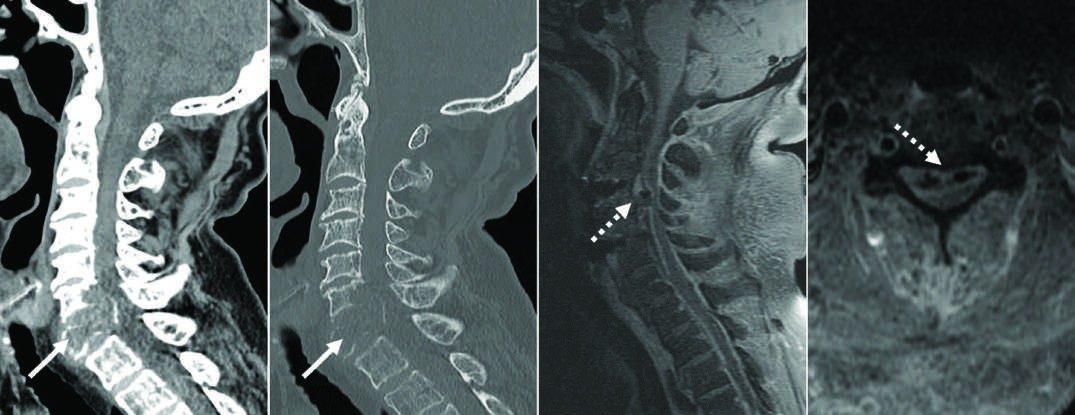
Caption: FIGURE 19-1 Cases of degenerative cervical disk disease and degenerative cervical (arrowhead) (A), and cervical magnetic resonance imaging (MRI) shows a herniated disease. Cervical x-ray shows osteophytic spurs at C5/C6 and C6/C7 levels (dotted arrow) flavum (double arrows) (D) in a case of degenerative cervical myelopathy. — Figure 19-2 Cases of cervical metastasis and cervical epidural abscess. Cervical computed tomography shows osteolytic lesions at C6 and C7 that protrude into the spinal canal (arrow) (A, B) in a case of cervical metastasis. Sagittal (C) and axial (D) views of cervical fat-suppressed contrast-enhanced magnetic resonance imaging show enhanced epidural lesions at C2/3–C4/5, which compress the spinal cord drastically (dotted arrows) in this case of cervical epidural abscess.
Generated from Harrison's Principles of Internal Medicine, 22nd Edition.